
Architectural Window Film: How Does It Work in Jonesboro, AR? Jonesboro’s summers bring sustained heat, high humidity, and intense UV exposure that standard building glass does nothing to filter. Architectural window film is a professionally applied solution that bonds to the interior surface of building glass and intercepts solar energy before it drives up interior temperatures, degrades furnishings, and strains cooling systems across homes and commercial properties throughout Northeast Arkansas. Defining Architectural Window Film Architectural window film is a thin, optically engineered layer applied to the interior surface of fixed building glass. It functions as a selective filter across the solar spectrum, managing heat, UV radiation, and glare without requiring window replacement or structural changes to the property. How Architectural Window Film Works Window film works by addressing solar energy at the glass surface before it enters the building interior. The solar spectrum carries visible light, infrared radiation, and ultraviolet radiation, each contributing differently to heat buildup, glare, and interior material damage. Blocking Infrared Heat Infrared radiation is the primary driver of heat buildup in buildings with significant glass exposure. High-performance architectural films use ceramic particle technology to intercept infrared wavelengths at the glass surface, reducing interior thermal load without requiring a heavily tinted or darkened appearance. Filtering UV Radiation Ultraviolet radiation passes through standard untreated glass and causes cumulative damage to flooring, furniture, upholstery, and merchandise over time. Quality architectural film blocks the vast majority of UV radiation at the glass surface while preserving a clear, natural interior view. Core Benefits for Jonesboro Properties Arkansas’s long hot summers, humidity, and sustained UV exposure make architectural window film a practical investment for both residential and commercial properties across the Jonesboro area. Heat rejection intercepts solar infrared energy at the glass surface, reducing interior temperatures and lowering the demand placed on cooling systems during Northeast Arkansas’s extended summer season. Glare reduction softens the intense afternoon light entering through south- and west-facing glass, improving comfort and usability in living rooms, offices, and retail spaces without eliminating natural daylight. UV protection shields interior furnishings, flooring, artwork, and merchandise from the fading and material breakdown caused by sustained ultraviolet exposure through untreated building glass. Architectural Film vs. Automotive Tint Architectural and automotive window films share a common purpose but are engineered as distinct products for distinct applications. Architectural film is designed for large, flat building glass panels with different adhesive systems, thermal properties, and installation requirements than the curved glass used in vehicles. If you have had your car tinted, the quality standard is familiar, but the product and process are specific to building glass. Choosing the Right Film Type for Your Jonesboro Property Film material and construction determine how well a product holds up under Arkansas’s sustained UV intensity and summer heat cycling. In a general sense, depending on the manufacturer, lower-grade dyed films can fade, discolor, or experience adhesive failure under the conditions Jonesboro buildings face every summer. Flores Tints installs three confirmed HITEK Films architectural products suited to different property needs. HITEK Ceramic DR delivers strong heat rejection with daytime privacy through its dual reflective construction, making it well suited for south- and west-facing residential and commercial glass. HITEK Ceramic Clear provides discreet solar control with minimal visual impact, preserving natural light while blocking UV and infrared energy. HITEK Silver Reflective offers maximum heat rejection and a clean architectural finish for commercial buildings with significant sun exposure throughout the day. Frequently Asked Questions About Architectural Window Film in Jonesboro How does architectural window film perform in Jonesboro’s heat and humidity? Northeast Arkansas summers combine sustained heat with significant humidity, conditions that lower-grade films can struggle to hold up under depending on the manufacturer. HITEK Films architectural products are engineered to maintain adhesion, optical clarity, and heat rejection performance through Arkansas’s thermal cycling and seasonal humidity. What is the difference between architectural film and automotive tint? Architectural film is designed for flat building glass with different adhesive chemistry, surface area requirements, and installation methods than automotive glass. The thermal dynamics of a fixed building panel differ from those of a vehicle window, and the film specifications reflect that difference. How long does architectural window film last in Arkansas? HITEK Films architectural products, including Ceramic DR, Ceramic Clear, and Silver Reflective, are backed by manufacturer lifetime warranties reflecting their long-term durability in demanding climates. In a general sense, depending on the manufacturer, lower-grade dyed or hybrid films can degrade significantly faster under Arkansas’s sustained UV intensity. Does window film interfere with WiFi, cellular, or smart home systems? HITEK Films architectural products use non-metallic ceramic construction that does not disrupt wireless signals of any kind. WiFi networks, cellular reception, GPS, and smart home devices all function normally through these films.
Best Window Tint for Windshields in Jonesboro, AR: Legal & Safe Options If you are researching the best window tint for windshields Jonesboro AR drivers can legally use, you are likely balancing two priorities: maximum heat rejection and strict compliance with Arkansas law. In Northeast Arkansas, summer humidity and direct sun exposure make windshield performance critical. At the same time, Arkansas windshield tint law 2026 sets firm limits on how dark or how low tint can extend on the front glass. This guide explains what is legal, how net light transmission works, and which ceramic technologies provide effective heat control without creating enforcement issues. Arkansas Windshield Tint Laws: The 2026 Jonesboro Driver’s Guide Arkansas Code § 27-37-306 regulates windshield tint statewide. For Jonesboro drivers, compliance comes down to two factors: the AR 5-inch windshield strip rule and the state’s net light transmission requirement. The 5-Inch Eyebrow Rule: Why the AS-1 Line Is Your Limit Arkansas allows a non-reflective tint strip across the top of the windshield, but it may not extend more than 5 inches from the top center or below the AS-1 line marked by manufacturers. The AS-1 line is typically etched near the upper corners of common vehicles like F-150s and Silverados.If no line is visible, installers measure a true five inches straight down from the top center. Anything darker below this boundary violates the AR 5-inch windshield strip rule and can result in enforcement during traffic stops in Jonesboro. Full Windshield Tinting: Is Clear Ceramic Film Legal in Arkansas? Yes, if it meets the state’s light transmission requirement.Arkansas permits aftermarket tint across the full windshield as long as net light transmission remains at least 50%. “Net” accounts for both factory glass and applied film. High-VLT clear nano-ceramic films, such as 70% VLT, maintain compliant light levels while reducing infrared heat and blocking UV exposure. Unlike dark films, these options do not noticeably darken the glass. Advanced films from HITEK Films provide strong IR rejection, preserve clarity, and meet legal requirements. The Net Measurement & 3% Tolerance: How Jonesboro Police Measure Tint Arkansas enforcement relies on tint meters that measure actual light passing through the combined glass and film.Because Arkansas measures net VLT, the label on the film box is not the final number. For example: Factory glass at approximately 70% VLT × 70% film ≈ 49% net (borderline). Factory glass at approximately 70% VLT × 80% film ≈ 56% net (safer margin). A small tolerance is often applied to account for meter variation, but drivers should not rely on that margin. Staying comfortably above 50% net helps avoid complications during roadside checks in Craighead County. Why Ceramic Tint Is the Gold Standard for Northeast Arkansas In Jonesboro, performance matters more than darkness. Ceramic windshield tint Jonesboro drivers choose is typically selected for its ability to reduce heat without pushing legal limits. Beating the Humidity: Why IR Rejection Matters More Than Darkness Infrared radiation is what causes dashboards, steering wheels, and seats to overheat.High-quality IR rejection window film AR drivers install uses nano-ceramic technology to block a significant portion of infrared energy while maintaining high visible light transmission. Many ceramic films can block up to 98% of IR and 99% of UV, even in lighter shades. In general, dyed films can fade over time depending on the manufacturer. For windshield applications where clarity and long-term performance matter most, advanced nano-ceramic options, such as those made by HITEK Films , provide more stable heat rejection and optical quality. Signal Friendly: Ensuring GPS and Cell Service Work in Rural Craighead County Metalized films contain microscopic metal layers that can interfere with radio signals. This may affect GPS accuracy, cellular reception, and embedded windshield antennas. Ceramic films are non-metallic. They provide strong thermal performance without disrupting electronic systems, which is an important factor for drivers traveling on Hwy 49, Hwy 63, and rural Craighead County roads. Top Windshield Tint Options for Jonesboro Drivers When evaluating options for ceramic windshield tint Jonesboro installations, two configurations are common: high-visibility full coverage and traditional glare strips. High-Visibility Nano-Ceramic (70%-80% VLT): Maximum Heat Rejection, Zero Legal Hassle High-visibility nano-ceramic in the 70%–80% VLT range is often called a “ghost” tint because it appears nearly invisible.This setup provides: Strong infrared heat rejection High UV protection Clear daytime and nighttime visibility Compliance with 50%+ net VLT when properly calculated For many Jonesboro drivers, this is the most balanced solution for reducing cabin heat while respecting Arkansas windshield tint law 2026. Traditional 5-Inch Sun Strips: Glare Protection for Hwy 49 & 63 Commutes A darker, non-reflective 5-inch strip at the top of the windshield remains a practical solution for low-angle sun exposure. Morning and evening glare along Hwy 49 and Hwy 63 can reduce contrast and increase eye strain. A properly measured eyebrow, installed within the AS-1 line Arkansas permits, improves comfort without affecting the primary field of vision. FAQs Can I tint my whole windshield in Arkansas? Yes, if the film results in at least 50% net light transmission. Dark full-windshield tint is not permitted, but high-VLT ceramic options often meet the legal requirement. What is the AS-1 line? The AS-1 line is a manufacturer marking near the top of the windshield that defines the maximum legal boundary for darker tint strips. What is the penalty for illegal tint in Jonesboro? Violations can be treated as a Class B misdemeanor and may result in fines, correction orders, or required removal of non-compliant film. Does windshield tint help with night driving? Yes. High-quality ceramic film can reduce glare from oncoming LED headlights while maintaining clear visibility when properly selected. 📞 Call *phone number* and get professional advice to ensure your windshield tint meets Arkansas law while delivering the heat rejection Jonesboro drivers need.

How Long Does Window Tint Last in Jonesboro, AR? (Local Guide) If you’re asking how long does window tint last in Jonesboro AR, the answer depends on how well the film handles Northeast Arkansas conditions. Delta heat, humidity, agricultural dust, and winter freeze place unique stress on window film. This guide explains realistic lifespans by material, how local weather affects performance, and what to watch for as tint ages. How Long Window Tint Actually Lasts in Northeast Arkansas How long does window tint last in Jonesboro AR varies by film quality and long-term exposure. In real local conditions, lifespans fall across a wide range. Dyed film: In a general sense, often shows fading, color change, or adhesive issues within a few years, depending on the manufacturer. Carbon film: Typically maintains appearance and performance longer than dyed options when properly cared for. Ceramic film: Designed for long-term durability and stable heat rejection in demanding climates. Ceramic window tint lifespan across Arkansas tends to be longer because these films reject heat rather than absorbing it, reducing stress on both the film and the adhesive layer over time. Why Jonesboro Weather Is Tough on Window Film Jonesboro experiences humid summers, strong sun, agricultural dust, and winter temperature swings. These factors combine to accelerate wear compared with more stable climates. Humidity and the Curing Phase Post-install, tint cures as moisture between glass and film evaporates. Humidity slows this, extending curing. Summer haze clears in days and cold, damp months take longer for bonding. Temporary haze/bubbles are normal if they fade. Summer Heat and Adhesive Stress Arkansas summers stress parked vehicle tint with sustained heat. Heating cooling cycles weaken adhesives, especially low-grade.Common dyed films absorb heat, speeding breakdown, color shifts, and bubbling. Advanced from HITEK Films manage heat better, cut adhesive stress. Agricultural Dust and Micro-Abrasion Jonesboro farmland dust settles in seals. Rolling windows with grit scratches film vertically. Micro-abrasion causes early wear in Northeast Arkansas, often overlooked. Comparing Materials: Which Tint Survives the Arkansas Sun? Material choice directly affects clarity, heat control, and how long tint stays compliant with Arkansas regulations. Common Standard Dyed Film: Why It Fails in 2–3 Years in Arkansas Dyed film uses pigments to cut glare. Dyes break down in prolonged sun, per manufacturer.Degradation causes color change, lost effectiveness. Carbon Film: A Reliable 5–7 Year Option for Arkansas Drivers Carbon swaps dyes for carbon materials, boosting stability and lifespan. In Arkansas, it holds appearance longer, steady heat reduction, no electronic interference. Ceramic Tint: 10–15 Years and the Best Heat Rejection in the Delta Ceramic/nano-ceramic films use particles to block heat, keep clarity. In Jonesboro, ceramics top for durability amid constant heat/humidity. Maintenance Tips to Extend Your Tint’s Life Proper care helps window tint reach the upper end of its expected lifespan. Ammonia-Free Cleaning Ammonia-based cleaners can weaken film layers and adhesives over time. Using ammonia-free glass cleaners and soft microfiber cloths preserves clarity and reduces surface wear. Protecting Film During Harvest Season Before rolling windows down, clearing debris from window gaskets helps prevent dust from scratching the film. Gentle cleaning habits are especially important during peak agricultural activity around Jonesboro. When to Replace Your Window Tint in Jonesboro Signs of window tint bubbling in Jonesboro or performance loss usually appear gradually. Persistent bubbles or edge lifting Noticeable color change or fading Hazy or distorted visibility Reduced interior heat control compared to previous seasons Freeze–thaw cycles can also contribute to edge peeling when moisture expands in window seals during winter months. FAQs Is 20% tint legal in Jonesboro, AR? No. Arkansas window tint laws require higher visible light transmission on most front side windows, and darker films may not comply. How long does window tint take to cure in Arkansas humidity? Curing can take several days in warm weather and significantly longer during colder, damp conditions. Does ceramic tint actually reduce heat better than darker films? Yes. Ceramic films manage infrared heat more effectively, allowing lighter shades to perform well without relying on darkness alone. What causes window tint to bubble? Bubbling usually results from adhesive breakdown caused by prolonged heat exposure, moisture intrusion, or lower-quality materials.

Window Tint Night Visibility: Jonesboro AR Drivers Guide Jonesboro, AR drivers often question whether window tint reduces night visibility on rural roads, balancing moderate daytime sun protection against safe low-light driving in spring storms and fog.Local conditions range from lit urban streets to pitch-black county roads where quick hazard detection is critical. Premium films maintain high optical clarity and minimize distortion even at moderate darkness levels, supporting safer night drives without sacrificing benefits. Effectiveness depends on VLT percentage, film quality, tint type, and how you adapt to northeast Arkansas’s humid, stormy climate. Quality options deliver reliable performance tailored to Jonesboro’s mixed urban-rural environment. Window Tint Basics: Effects on Night Visibility Window tint reduces incoming light, which can impact night vision depending on the visible light transmission (VLT) percentage. This metric measures how much visible light passes through the film and glass combined. Higher VLT allows more light for clearer views while lower VLT darkens the interior and may complicate low-light situations. Quality films provide superior clarity without electronic interference, making them ideal for Jonesboro’s blend of highways and rural routes.They reduce glare from headlights while preserving sharpness, addressing Arkansas’s moderate sun transitions to stormy, foggy nights. How Much Does Visibility Change in Jonesboro Conditions? Window tint can reduce incoming light by 15-50% depending on VLT, amplifying challenges in dark rural areas or storms. Jonesboro and northeast Arkansas drivers report increased glare reduction but potential delays in hazard detection on unlit roads. Visibility remains adequate in well-lit zones. Tint minimizes issues when paired with clean windows and adaptive driving, but doesn’t fully compensate for fog or heavy rain. Window Tint vs Regular, Carbon, and Other Tints in Arkansas Heat Ceramic tint clearly outperforms others across Arkansas’s variable weather. HITEK Films’ Ceramic films deliver superior clarity with minimal distortion and excellent glare reduction on humid nights or foggy rural roads. Dyed, basic, or metallic films, depending on manufacturer, have poorer quality that can fade, haze, or cause signal interference over time. Carbon provides moderate clarity and heat rejection but can’t match ceramic’s long-term sharpness. HITEK Films’ ceramics offer maximum optical stability, UV protection, and the best performance for Arkansas night driving in mixed climates. Benefits of Window Tint Specifically for Jonesboro Drivers Quality tint blocks glare from oncoming headlights. It prevents eye strain on rural night roads. UV protection saves interiors from sun fading. Less distortion helps navigation in mixed lighting for safer wildlife-area drives. Legal non-reflective windshield strips above the AS-1 line cut glare without darkening views. Arkansas allows top-portion tint. These boost visibility with no legal issues. They trade higher cost for daily safety in storms. Is Window Tint Worth It in Jonesboro? Window tint enhances glare reduction but doesn’t eliminate visibility challenges in pitch-black or stormy areas. Low-light exposure means darker tints amplify shadows from water scatter and limited lighting. Use adaptive habits or brighter routes alongside your tint. Avoid expecting perfect vision without eye adjustment. In Arkansas humidity, low-quality films may risk bubbling or haze from moisture.Choose premium films, such as those made by HITEK Films, to prevent this issue. Choosing the Best Window Tint Brands for Arkansas HITEK Films excels with options offering excellent optical clarity, lifetime warranties, and minimal haze. Look for warranties covering moisture and UV exposure. HITEK Films’ lifetime coverage ensures long-term performance in variable climates. For best window tint Jonesboro AR, prioritize nano-ceramic options like HITEK Films ’ offerings for superior results tailored to your vehicle and Arkansas demands. FAQs Does window tint affect visibility at night in Jonesboro AR / Arkansas conditions? Yes, but premium options at 35% VLT reduce glare significantly while maintaining good clarity. How much does window tint reduce night visibility compared to regular tint? It can darken views by 15-50% depending on VLT, with higher clarity in ceramic versus dyed or metallic films. Is window tint worth the extra cost for Arkansas variable weather? For Jonesboro drivers facing storms and fog, enhanced safety, glare reduction, and protection justify the investment over basic films. Can you put tint on the windshield in Arkansas? Yes, non-reflective strips are legal and effective. Arkansas law allows tint on the top five inches of the windshield. Does window tint reduce glare from headlights and save on eye strain in variable climates? Yes, less glare can improve comfort during night drives. Combine with smart habits for maximum effect. 👉 Call *phone number* and get professional advice on window tint options suited to Jonesboro’s driving conditions.
Does Ceramic Window Tint Really Block Heat in Jonesboro, AR? (The Truth for Humid Summers) Jonesboro summers bring average highs around 90-92°F in July, with humidity frequently driving the heat index into the 100s. Local drivers often ask whether ceramic window tint Jonesboro AR genuinely cuts interior heat in this sticky climate or if the benefits are exaggerated. Premium nano-ceramic films block substantial heat through high infrared heat rejection, typically exceeding 90% IR, creating noticeably cooler cabins and reduced AC strain. Effectiveness depends on film quality, installation precision, and how you manage your vehicle in humid conditions. HITEK Films’ nano-ceramic lines, including Ceramic Ultra and Ceramic IR, deliver strong, reliable performance tailored to Arkansas’s hot, humid summers. What Is Ceramic Window Tint and How Does It Work? Nano-Ceramic Technology Explained Ceramic window tint Jonesboro AR embeds tiny nano-ceramic particles that specifically target infrared heat rejection, the main carrier of radiant heat from sunlight. This non-metallic construction blocks heat without interfering with GPS, cell signals, or radio, a common issue with metalized films. HITEK Films’ Ceramic Ultra achieves up to 96% IR rejection at 1025nm and 71% total solar energy rejection (TSER), while Ceramic IR provides 75% broad-range rejection (740-2500nm). The film rejects solar energy at the glass surface before it enters your cabin, directly addressing the challenges Arkansas humidity presents. Does Ceramic Tint Actually Block Heat? Real Performance Stats IR Rejection, TSER, and Heat Reduction Numbers Premium ceramic tint heat rejection delivers measurable results. HITEK Films Ceramic Ultra reaches up to 71% TSER and 96% IR rejection, with 99% UV block across various shades. Lines like Ceramic Plus offer 90-92% IR rejection and 61-69% TSER depending on visible light transmission (VLT). Top-tier films hit up to 98% IR rejection, outperforming basic or carbon films in radiant heat block Arkansas. How Much Cooler Does Your Car Get in Jonesboro? Ceramic tint reduces car interior temperature by 15-35°F after one hour in humid 90°F+ sun. Jonesboro and Northeast Arkansas drivers report less initial heat blast when entering and faster AC cooldowns. Interiors remain measurably cooler in humid AR heat. Parked vehicles left all day still accumulate heat. Tint slows buildup significantly but doesn’t eliminate it entirely. Pair with shade parking or ventilation for optimal results. Ceramic Tint vs Regular, Carbon, and Other Tints in Arkansas Heat Why Ceramic Wins for Humid Summers Ceramic vs regular tint AR shows clear superiority. Dyed or basic films can offer limited IR block and may fade faster depending on the manufacturer, though quality options exist. Carbon improves on dyed films with moderate IR rejection but falls short of ceramic’s 90%+ IR and higher TSER. Metalized options can cause signal interference. In Arkansas’s humid climate, ceramic vs carbon tint favors ceramic for maximum heat block, long-term stability, and represents the best tint for Arkansas heat. Benefits of Ceramic Tint Specifically for Jonesboro Drivers UV Protection, Glare Reduction, and AC Savings HITEK Films reject 99% UV rays, preventing interior fading and cracking under intense Arkansas sun. Glare reduces sharply for safer drives, particularly during humid mornings and evenings when sunlight intensifies. Lower cabin heat eases AC load. Practical savings include reduced fuel consumption from shorter cool-down times in Jonesboro traffic and throughout Northeast AR summers. Windshield Options for Maximum Heat Block Clear nano-ceramic films like HITEK Films Ceramic Clear (42% TSER) maximize infrared heat rejection without darkening your view. Arkansas law permits non-reflective tint on the top five inches of the windshield, or fully clear UV/IR films across the entire windshield. These options provide major cooling benefits with no visibility issues or enforcement concerns, ideal for managing humid glare. The trade-off involves higher upfront investment versus everyday comfort gains. Is Ceramic Window Tint Worth It in Jonesboro? Limitations and Realistic Expectations Ceramic tint dramatically slows heat buildup but doesn’t eliminate it. Prolonged exposure in humid conditions means parked cars still warm from convection and road heat. Use shade parking or ventilation alongside your tint. Avoid expecting zero heat without airflow management. In Arkansas humidity, low-quality films may risk bubbling from moisture. Choose premium films, such as those made by HITEK Films, to prevent this issue. Choosing the Best Ceramic Tint Brands for Arkansas HITEK Films excels with Ceramic Ultra (96% IR, 71% TSER, lifetime warranty) and Ceramic IR (75% IR, color-stable). Look for warranties covering moisture and UV exposure. HITEK Films’ lifetime coverage ensures long-term performance in humid climates. For best ceramic tint Jonesboro AR, prioritize nano-ceramic options like HITEK Films’ offerings for superior ceramic tint Jonesboro AR results tailored to your vehicle and Arkansas heat demands.
Cheap Window Tint Jonesboro AR: Real Costs & Quality Guide You’re researching whether cheap window tint is a waste of money in Jonesboro AR because extreme summer heat and Delta humidity can turn any parked vehicle into a heat trap. Low-cost and DIY tint options promise fast relief, but understanding window tinting prices in Jonesboro AR helps explain why many of these films fail early and cost more over time. Bubbling, peeling, and fading are common outcomes with budget tint, often leading to premature removal or replacement. This guide explains how local climate conditions, Arkansas tint laws, and film technology affect performance so drivers can evaluate real costs rather than advertised prices. The “Budget” Tint Appeal in Northeast Arkansas Jonesboro drivers often search for cheap window tint deals as summer temperatures push vehicle interiors well above comfort levels. Arkansas State University students and budget-focused households are frequent targets of full-car tint promotions and mobile installers advertising quick turnaround. These offers appeal to immediate needs for heat rejection window tint in Jonesboro, especially during peak traffic along Caraway Road. The short-term savings, however, rarely account for how humidity and sun exposure affect film durability in Northeast Arkansas. Why Cheap Tint Fails Faster in the Jonesboro Climate Jonesboro’s environment combines persistent humidity with agricultural dust, creating challenging conditions for window film adhesion and longevity. Humidity vs. Low-Grade Adhesives Cheap dyed films typically rely on basic, water-based adhesives that struggle in high humidity. Moisture intrusion causes edges to lift and air pockets to form, leading to bubbling within months. Higher-quality ceramic films use more stable adhesive systems designed to bond consistently, even in humid Delta conditions. The “Purple” Problem: UV Degradation in the Delta Dyed window tint often turns purple because ultraviolet radiation breaks down dye molecules over time. In Arkansas sun exposure, this color shift can appear within 12 to 18 months and cannot be corrected without full removal. Ceramic films, including advanced options from HITEK Films , use metal oxide technology instead of dyes, preventing discoloration while maintaining optical clarity. Ceramic vs Dyed Window Tint Effective heat rejection window tint in Jonesboro depends on Total Solar Energy Rejection (TSER). Ceramic window tint consistently delivers higher TSER, reducing interior temperatures by as much as 20–30°F during stop-and-go driving on Red Wolf Boulevard. Dyed films offer limited heat control and degrade quickly, while ceramic films remain stable, non-reflective, and compatible with modern vehicle electronics. Reduced heat load also lowers air conditioning strain, which can improve overall driving comfort during long summer commutes. Why Cheap Tint Costs More Long-Term The long-term cost of cheap tint often exceeds the price of quality installation. Failed films require time-intensive removal, and improper scraping can damage rear defroster lines. Many drivers pay once for cheap tint, again for removal, and a third time for replacement. Installing a durable ceramic film initially reduces the risk of bubbling and peeling window tint repair and avoids repeated labor costs within a few years. FAQs Will cheap tint ruin my rear defroster? It can. Improper removal of failing tint may damage defroster lines, leading to costly repairs that often exceed the original tint price. Is 25% tint legal in Arkansas? Yes. Arkansas law allows a minimum of 25% VLT on front side windows, with darker limits permitted on rear windows. Does ceramic tint really make a difference in Arkansas heat? Yes. Ceramic window tint vs. dyed film comparisons show significantly better heat rejection, stable color, and long-term UV protection in humid climates. 👉📞 Call *phone number* and get professional advice on choosing the right window tint for Jonesboro’s climate and legal requirements.
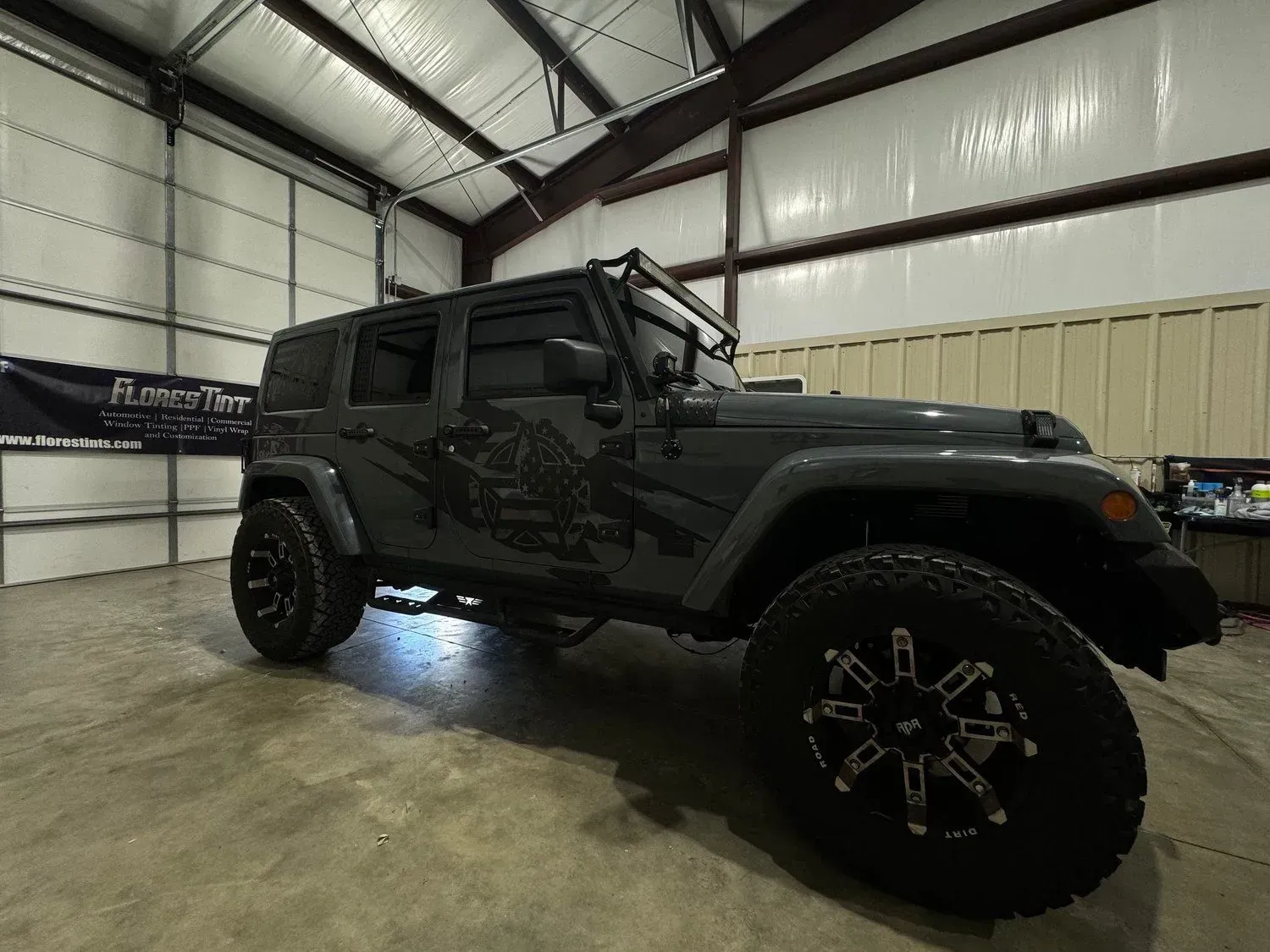
Factory or Aftermarket Tint: The Difference For Drivers In Jonesboro, AR Jonesboro drivers comparing factory tint vs aftermarket tint ask one thing. Does my SUV’s dark privacy glass handle Delta summers? It hides gear but lets 95°F humidity bake interiors and fade leather.This guide sorts the physics from the laws. It shows you the legal tint Jonesboro AR drivers need. It also highlights ceramic upgrades that actually block heat. What is Factory Tint? Understanding Privacy Glass Factory tint is privacy glass from the manufacturer. It darkens windows without adding layers. How Privacy Glass is Manufactured (Pigment vs. Film) Dyes embed between glass panes at high heat. Unlike aftermarket film, no removable layer exists. This makes it permanent but basic. Why Factory Tint Looks Dark But Feels Hot Dark pigment scatters visible light for looks. It skips Infrared (IR) rejection entirely. Cabins stay hot despite the shade. Aftermarket Tint: The Performance Upgrade Aftermarket pros apply high-quality films for real heat rejection. Ceramic window tint vs privacy glass leads in Arkansas conditions. HITEK Films offers advanced ceramic options for sustained heat. Ceramic vs. Carbon: Which handles the Arkansas heat best? Ceramic uses nano-particles for superior heat block without fade. Carbon offers value but lower TSER ratings. For the best tint for Arkansas heat, ceramic remains the top choice. UV Protection: Why 99% rejection is a health necessity UV rays fade Delta truck interiors fast. Ceramic films hit 99% block. This prevents cracks and skin risks on long hauls. Arkansas Window Tint Laws: Staying Legal in Craighead County Arkansas window tint laws 2026 limit front sides to 25% VLT. Local enforcement in Craighead County actively checks tint compliance. The 25% VLT Rule for Passenger Cars Sedans need more than 25% light through front windows. 25% VLT Arkansas means the meter measures total light, not film alone. Truck and SUV Exceptions: The 10% Rear Rule SUVs allow 10% rear VLT. Fronts still must meet the 25% minimum. There are no exceptions for trucks. Factory vs. Aftermarket: A Side-by-Side Comparison Factory tint provides less than 30% Total Solar Energy Rejection (TSER). Aftermarket ceramic film offers 50% to 65% TSER.Factory glass offers minimal UV block. Ceramic films provide 99% protection. In Jonesboro, factory tint is included in the vehicle price. Professional ceramic installs range from $300 to $700.Factory VLT is fixed. Aftermarket allows full control to state legal limits. Can You Tint Over Factory Privacy Glass? Yes, but you must calculate net VLT carefully. Factory 70% glass plus 25% film drops to about 17%. This is illegal under the 25% law. Managing the “Net VLT” for Legal Compliance Professionals meter every window post-install. Most light meters allow a small margin of variance, which professionals account for during installation. Adding Heat Rejection to your SUV’s Rear Windows Rear 10% allowance lets full ceramic block heat. The SUV back window trap is common. Dark factory glass still lets IR scorch seats.
How to Pick the Best Window Tint Shop In Jonesboro, AR Finding the best window tint shop in Jonesboro, AR is about more than price. You need tint that blocks heat, stays legal, and looks clean for years. In Northeast Arkansas, cheap tint often fails fast. Farm dust, heavy pollen, and summer humidity lead to bubbling, peeling, and cloudy film. This guide explains what separates professional shops from budget installs, using standards that work with Arkansas laws and local weather. Why the Best Window Tint Shop in Jonesboro AR Matters for Local Climate Jonesboro’s climate is tough on window film. High humidity weakens adhesive. Pollen and farm dust ruin installs done in open garages. Low-quality tint may look fine at first, then fail within months.Quality heat rejection film Arkansas drivers rely on blocks infrared heat before it enters the cabin. This keeps interiors cooler, reduces AC use, and protects seats and trim from UV damage. The best window tint shop in Jonesboro AR focuses on performance and installs film in clean, controlled spaces built for long-term results. 4 Standards of a Top-Rated Jonesboro Tint Professional Top rated window tinting Jonesboro shops meet a few non-negotiable standards. These protect both your vehicle and your money. 1. Understanding Legal Tint Limit Arkansas: 2025 Requirements The legal tint limit Arkansas rules did not change in 2025. Sedans must have at least 25% VLT on all side windows. Trucks and SUVs must have 25% VLT on front side windows but can go as dark as 10% on rear sides.Professional shops explain this clearly. The best installers also show VLT readings before installing film, so you know exactly what you’re getting. 2. Dust-Free Installation: Why Open Garages Are a Red Flag Open garages allow pollen, cotton dust, and debris to stick to fresh film. Once trapped, it cannot be fixed. Closed, climate-controlled bays let film cure evenly despite Arkansas weather changes.A reputable shop will gladly show you the install area. Clean spaces usually mean consistent, careful work. 3. Brand Specialization: HITEK Films Certification Certified installers receive training on premium films like HITEK Films. These films offer tested heat rejection and resist fading under strong sun.Certification also shows the shop follows proper install standards instead of cutting corners. 4. Experience With Truck & SUV Window Patterns Many Jonesboro drivers own trucks and SUVs. These vehicles often have curved glass, dot matrix borders, and sliding rear windows that require precise cutting.Experienced shops use computer-cut patterns and understand the legal tint flexibility for trucks. This is key for clean results on F-150s, Silverados, and large SUVs. Ceramic Window Tint Jonesboro AR vs. Carbon: Which Film Is Best? Ceramic window tint Jonesboro AR drivers choose uses non-metallic nano-particles to block over half of infrared heat. It does this without affecting GPS, cell signals, or keyless entry.Carbon tint works better than dyed film and resists fading, but it blocks less heat. When comparing carbon vs ceramic tint pros and cons, ceramic costs more upfront but delivers better comfort and lasts longer, especially in Jonesboro’s heat. Arkansas Window Tint Laws 2025: Understanding VLT Percentage Arkansas Arkansas window tint laws require 25% VLT on all sedan windows. Trucks and SUVs must meet 25% on front side windows and can use 10% on rear sides. Windshields may have a non-reflective strip across the top five inches. VLT Percentage Arkansas: Sedan vs. Truck and SUV Rules Sedans must stay at 25% VLT on all sides. Trucks and SUVs can go darker in the rear, allowing more privacy and heat control. Choosing tint without matching your vehicle type often leads to expensive rework. Residential Window Tinting Jonesboro: Keeping Homes Cooler Residential window tinting Jonesboro homeowners choose can lower indoor temperatures by 10 to 15 degrees. It also blocks UV damage to furniture and floors. Ceramic home films reduce heat without creating mirror-like glare.Because humidity affects homes too, professional installation is just as important as it is for vehicles. Why Professional Tint Removal Matters in Jonesboro DIY tint removal in Arkansas humidity often damages rear defroster lines and leaves sticky residue on glass. Professional removal uses steam and controlled tools to protect heating elements.Window tint removal cost usually runs between $100 and $200. That’s far cheaper than replacing damaged glass or defrosters. Conclusion: Checklist for Your First Quote Look for strong knowledge of Arkansas tint laws, climate-controlled install bays, and experience with trucks and SUVs. Get detailed car tinting Jonesboro quotes from more than one shop, and ask for a ceramic heat test demo.☎️ Speak with a certified professional at *phone number* to ask informed questions about film options and Arkansas’s 2025 window tint laws.